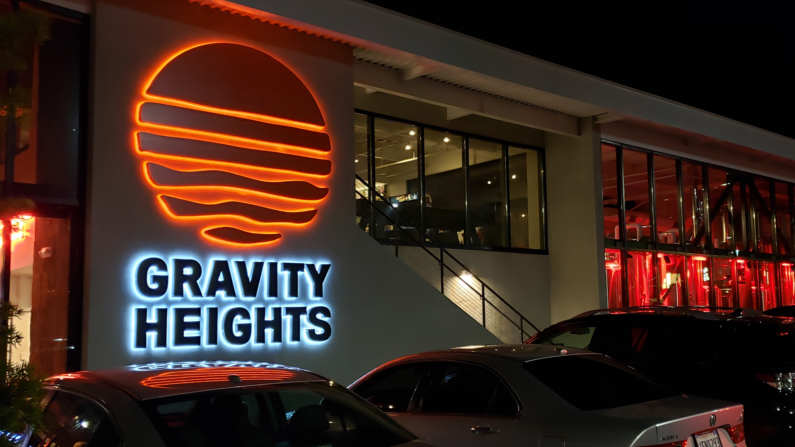
A shopping center has two kinds of visitors moving through it at once, and they need different things. The driver coming off the street is going fast, scanning for the entrance and the right lane. The shopper on foot is slow, hunting for a specific store, a restroom, or the way back to the car. One wayfinding system has to serve both, and the sign that works for one is wrong for the other.
Get the split right, and people find what they want without circling the lot or flagging down an employee. Get it wrong, and they leave.
Start At The Street
Before anyone parks, they have to find you and pick a lane. That is where the first signs earn their spot.
- A center ID or pylon sign at the entrance, tall enough to read from the road, usually listing the anchor stores.
- Vehicular directional signs at each turn, big and plain, pointing toward parking and the major tenants.
- Lane and entrance signs where the driveway splits.
Drivers read these at twenty or thirty miles an hour. Few words. Big arrows. A sign with a paragraph on it is a sign nobody finishes in time.
Once They Park
On foot, the whole system changes. Now people want details.
- A directory board with a clear map and a you-are-here marker at the main walkways.
- Pedestrian directional signs where the paths cross.
- Parking zone markers so people remember where they left the car. Lot A, Lot B, a color, anything they can hold onto.
- Tenant blade and suite signs so each store is easy to spot up close.
The directory is the one people lean on most, and it is the one that most often becomes stale. A map missing half the current tenants sends shoppers the wrong way.
What Makes The System Actually Work
The signs matter less than how they fit together. A few things separate a center that flows from one that frustrates:
- Consistency: One look across every sign, so people trust the next one will work the same way.
- Decision points: A sign at every spot where someone has to choose a direction, and nothing cluttering the spots where they do not.
- Hierarchy: Big and bold for drivers, detailed for walkers, never mixed.
- ADA: Accessible parking, restroom, and route signs built to California specs, not an afterthought.
- Lighting and durability: Signs are lit for night and built for sun, so the system still works after dark and a few summers in.
Signs in San Diego
A shopping center almost always runs on a sign program, a master set of rules that the city approved for the whole property. New signs have to match it. That keeps the center looking like one place, and it means you cannot just bolt up whatever you want.
Past that, the city sign rules still apply. Size, height, and placement go through Development Services, and signs near intersections have tight height limits so they do not block sightlines.
So, plan the system against your sign program first. It saves a redraw and a kicked-back permit.
Tired of watching shoppers wander your lot or miss a tenant entirely? Call Sign Distinction. We design and build full wayfinding systems for San Diego shopping centers. Pylons, directories, directional signs, parking markers, ADA, all matched to your sign program and built to last.