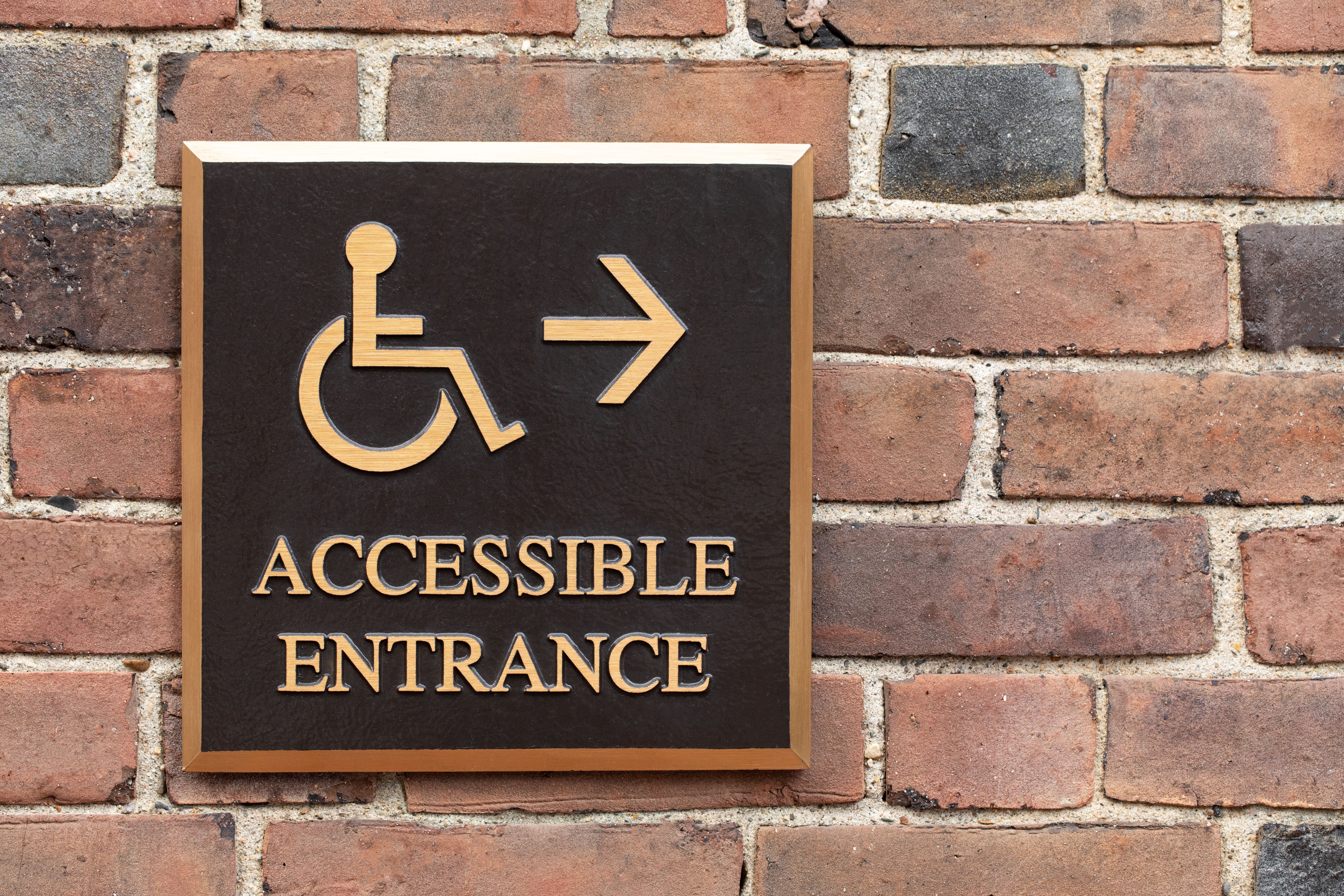
A patient in a wheelchair rolls up to a restroom door and stretches a hand toward the placard. Their fingertips should land on raised characters and Braille without twisting the wrist or reaching overhead. When a placard sits four inches past that reach, the patient reads a message about the practice that no website or brochure can undo. We're Sign Distinction, a sign shop on Evening Creek Drive in San Diego, and we build ADA signage that meets the hand on the first attempt every time.
What Does "ADA Compliant" Mean for a Medical Office Anyway?
Most practice managers have heard the phrase a thousand times without a straight answer on what the phrase covers. The 2010 ADA Standards for Accessible Design, Section 703, holds the full answer for tactile signage inside a medical office, and every spec inside that section is concrete, measurable, and enforceable on inspection day. Inspectors arrive carrying a tape measure and a working memory of the code. Our shop builds from the same tape measure and the same code book every single day.
Mount Heights Live Inside a Twelve-Inch Window
Section 703.4.1 draws a narrow range for tactile character placement on permanent room signs across every San Diego medical office. The baseline of the lowest raised character has to sit at a minimum of 48 inches above the finished floor. The baseline of the highest raised character can't climb above 60 inches from that same floor. We stage every sign against a mock door inside our shop before anything ships, so the tape measure and the code section agree before the first screw goes in.
Walk Through a Real Install With Us
An install day starts with the floor plan spread across a reception desk and a list of every permanent room tagged by sign category. Our installer measures twice per door, marks the mounting center, and sets the placard while the lead staff member watches the height land inside the window. Each restroom, exam room, lab, and consult room gets its own tactile sign, and each directional sign lives in a separate category with a different rulebook. That separation is where most older medical offices lose compliance points during a walkthrough.
Braille, Finish, and the Contrast Benchmark That Rules Inspection
Section 703.3 requires contracted Grade 2 Braille with domed dots set to precise spacing across the full bottom of every tactile sign. Section 703.5.1 calls for non-glare finishes and meaningful contrast between characters and the background field they sit on. The 70 percent light reflective value benchmark most inspectors use comes from industry guidance and ADAAG commentary rather than the hard code text itself. We fabricate on matte substrates with pigment pairings checked against that benchmark under the LED color temperatures medical offices run at the ceiling.
Access Builds Trust Before a Single Word Gets Spoken
A patient who finds the restroom, the lab, and the exam room on their own walks into an appointment calmer and readier to listen. That kind of quiet ease shows up in patient reviews, in return visits, and in referral chains. Sign Distinction holds a California C-45 electrical sign license and serves medical offices across San Diego with ADA signage, interior signs, and exterior building signs built from the same Section 703 discipline.
Book a Walkthrough of Your Office
Your patients deserve signage that reads cleanly on the first pass, and your practice deserves an inspection that holds up without surprises. Call Sign Distinction at (858) 391-8084 to schedule an on-site review of your current ADA signs and a written plan for any Section 703 gaps we find along the way. We'd be glad to walk through your office with you and map the next steps together.